
BACHELOR OF SCIENCE IN AERONAUTICS TECHNOLOGY (BAT)
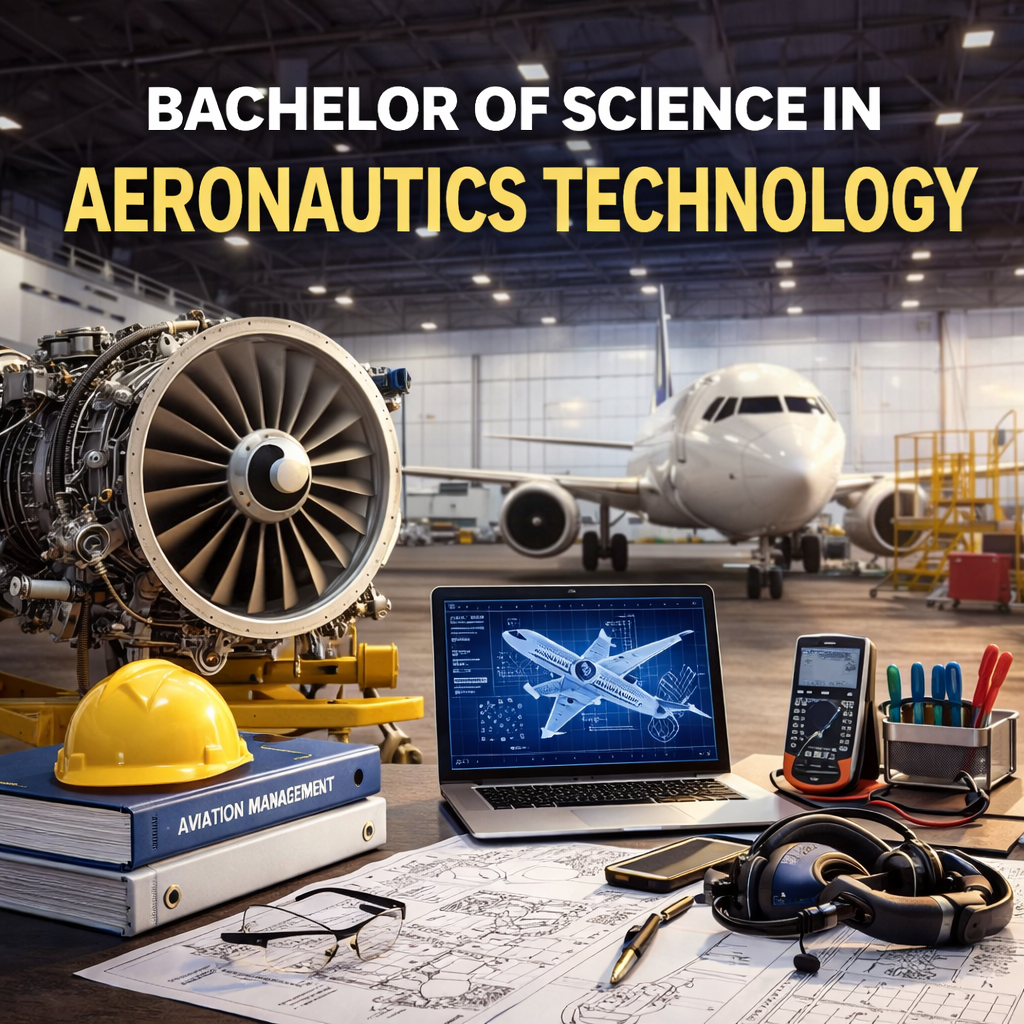
BACHELOR OF SCIENCE IN AERONAUTICS TECHNOLOGY (BAT)
(N/525/6/0109)(10/28)(MQA/PA 14943)
Bachelor of Science in Aeronautics Technology (BAT) is a practical, technology-focused degree designed to prepare students for careers in aircraft systems, maintenance, and aviation engineering. The program covers key areas such as aircraft engineering technology, aircraft maintenance engineering, and MRO (Maintenance, Repair, and Overhaul) management, equipping students with both theoretical knowledge and hands-on technical skills.
Students will also gain insight into airport operations, air cargo management, flight safety, and aviation training systems, offering a well-rounded view of the aviation ecosystem. With exposure to topics like airport ground handling, pilot and cabin crew training, and airspace economies, graduates will be ready for diverse roles in airlines, airports, MRO facilities, and aerospace organizations.
QUICK FACT
Duration
3 YEARS
Credit Hour
120 Credit Hour
Majoring
- Avionics
- Aircraft Maintenance
WHY CHOOSE UNICAM?
UniCAM’s BAT program is tailored to match the evolving demands of the aviation and aerospace industry, with a strong focus on aircraft systems, MRO, and engineering innovation.
Students gain real-world experience through labs, simulations, and access to aircraft components, preparing them to meet global standards in aeronautics technology.
With a mix of technical expertise, soft skills, and exposure to multiple aviation domains, UniCAM ensures graduates are career-ready and competitive in the aviation workforce.

Has Numerous Career Prospects
- Aerospace Engineer
- CAD Technician
- Design Engineer
- Higher Education Lecturer
- Maintenance Engineer
- Manufacturing Systems Engineer
Program Aims
- Apply knowledge of mathematics, science, engineering fundamentals, manufacturing and automotive design principles, and humanities to the engineering procedures, processes, systems or methodologies.
- Solve engineering problems systematically to reach substantiated conclusions, using tools and techniques appropriate in manufacturing automotive design technology.
- Design solutions for aerospace engineering technology problems (Systems, components, processes)
- Plan and conduct experimental investigations related to automotive design problems, using data from relevant sources